
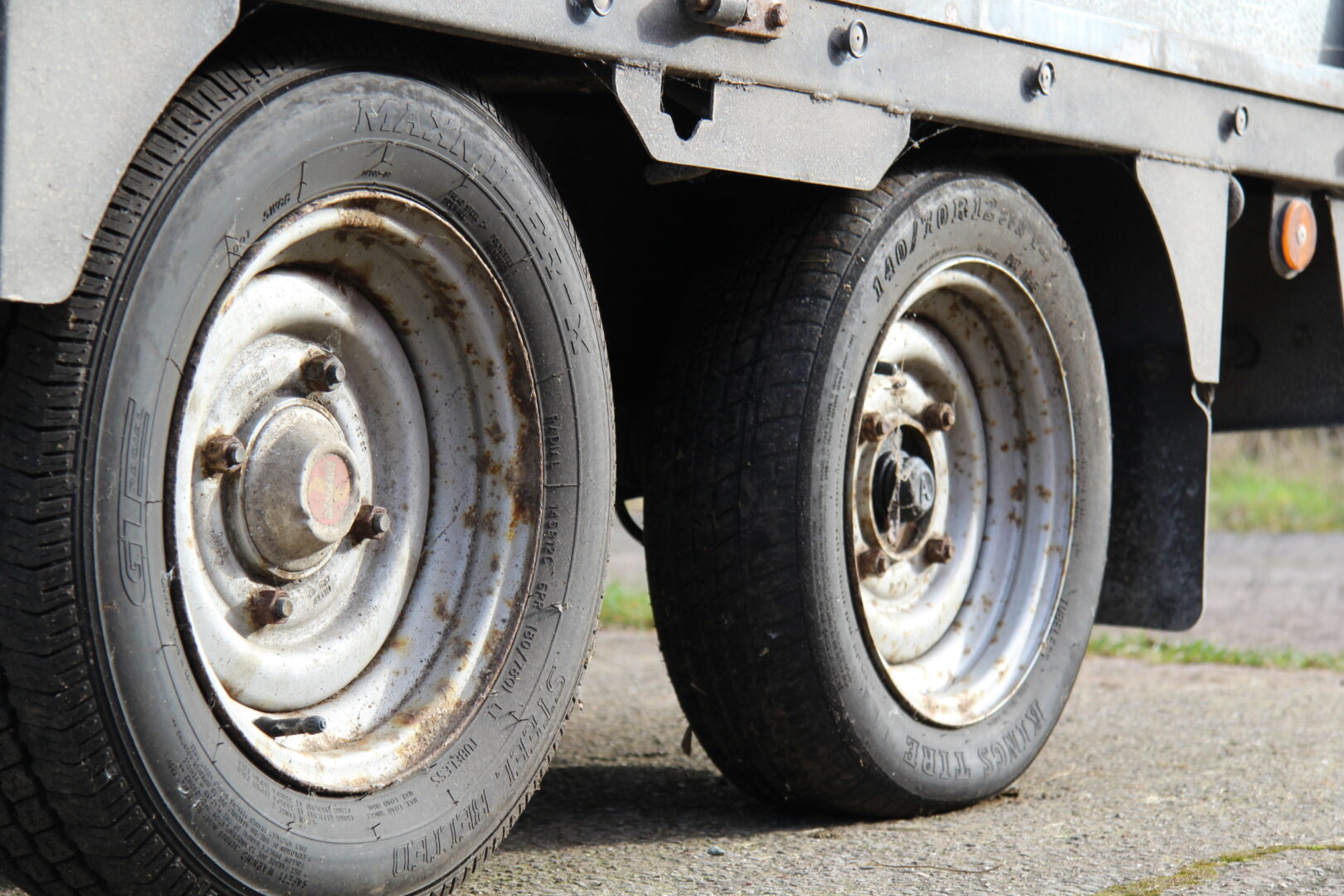
When trailers are involved, tyres are one of the most critical safety components – yet they are still too often overlooked. At Towing Solutions, trailer tyre safety is not an afterthought; it is a core part of our Trailer Servicing & Maintenance Courses and a major factor in preventing incidents on UK roads.
Whether you already work in the industry, maintain your own trailer fleet, or are developing your skills as a professional trailer service engineer, understanding and applying robust tyre checks is essential. This guide brings together best practice, UK legal references, TyreSafe advice and practical training insight from Towing Solutions.
🎥 Watch: Trailer Servicing Training & Aftercare Support
See our Trailer Servicing & Maintenance Course in action and hear how we support service engineers long after the course has finished:
▶ Watch the Towing Solutions Trailer Servicing Course video on YouTube
Why Trailer Tyre Safety Matters
UK road safety data and industry campaigns continue to highlight the dangers of defective tyres. TyreSafe reports that, on average, more than 150 people are killed or seriously injured each year in incidents where defective tyres are a contributing factor.TyreSafe – Case for Action
When a trailer is attached, the risks multiply. Extra load, uneven distribution, incorrect tyre pressures and higher operational stress can quickly turn a small defect into a serious emergency. A tyre issue on the towing vehicle is dangerous; a tyre failure on the trailer – especially at speed or when fully loaded – can be catastrophic.
The UK Government’s own guidance on towing a trailer with a car highlights wheels and tyres as a specific safety check, including tread depth, condition and correct inflation for the load being carried.GOV.UK – Tow a trailer with a car: safety checks
Tyre safety starts with your service
Every time you carry out a trailer service, you have the opportunity to prevent a breakdown or serious incident. Robust tyre checks are one of the most powerful tools you have as a trailer service engineer.
UK Legal Requirements for Trailer Tyres
For light trailers towed by cars and light vans, tyres must meet the same basic legal standards as those fitted to cars. This includes:
- Minimum tread depth: at least 1.6 mm across the central three-quarters of the tread and around the entire circumference of the tyre.TyreSafe – Tread Depth Guide
- Tyre condition: free from dangerous cuts, bulges or exposed cords, and suitable for the purpose and load.GOV.UK – Trailer safety checks
- Correct inflation: tyres must be inflated to the manufacturer’s recommended pressure for the load being carried.
For heavier trailers towed by vehicles over 3,500 kg gross vehicle weight, different tread depth rules apply (typically 1 mm minimum), and operators should refer to specific DVSA and government guidance.GOV.UK – Tyre defects and damage: HGVs, buses and trailers
DVSA and TyreSafe both strongly recommend replacing old trailer and caravan tyres even if tread depth appears adequate, particularly when tyres are over 7–10 years old, due to age-related deterioration.DVSA – Caravan, motorhome & trailer tyre reminder
What Should Be Checked During a Trailer Tyre Inspection?
A professional trailer servicing inspection should include a thorough tyre and wheel check as standard. Key elements include:
- Tread depth – Check with a gauge across several points. While 1.6 mm is the minimum legal limit for light trailers, many safety organisations recommend replacing at 3 mm to maintain wet grip and braking performance.
- Tyre pressure – Pressure should match manufacturer recommendations, adjusted for the trailer’s payload. Under-inflated tyres run hotter, wear faster and are more likely to fail; over-inflation reduces contact patch and grip.
- Sidewalls and surface condition – Look for cuts, bulges, cracking, flat spots, or embedded objects. Any damage or deformation can indicate weakened structure and must be investigated.
- Tyre age – Check date codes and be especially cautious with tyres over 5–7 years old, even if tread appears healthy. Trailers that stand for long periods are prone to age-related cracking.
- Load rating and speed rating – Ensure the tyre’s load index and speed symbol are appropriate for the trailer’s maximum authorised mass (MAM) and intended use.
- Wheel security – Check wheel nuts/bolts for correct torque, clean mating faces and any signs of fretting or movement. Wheel loss is a serious and avoidable risk.
For simple, shareable monthly checks, TyreSafe’s A.C.T. message – Air pressure, Condition, Tread – is a great resource for both engineers and end users.TyreSafe – The Checks
TyreSafe & Towing: Essential Reading
If you want to deepen your knowledge around tyre care while towing caravans or trailers, TyreSafe provides an excellent overview specifically for towing safety:TyreSafe – Towing Safety Guide
For trailer service engineers, this is invaluable background to complement hands-on skills and ensure your advice to customers aligns with national safety campaigns.
How Towing Solutions Builds Tyre Safety into Trailer Servicing Training
On our Trailer Servicing & Maintenance Course, tyre inspection and safety are built into the practical training from day one. Delegates learn how to:
- Carry out a full trailer tyre and wheel inspection with confidence
- Identify defects that compromise safety or legality
- Understand how load, speed and usage affect tyre wear and stability
- Advise customers clearly on tyre replacement, inflation and age-related issues
- Integrate tyre checks into a structured, repeatable service routine
This practical, real-world approach gives trailer service engineers capability that goes far beyond a basic checklist.
Ongoing Support: Our Trailer Servicing Help Group
Training with Towing Solutions doesn’t end when you leave the classroom. Every delegate who completes a trailer servicing course is invited into our long-running Trailer Servicing Help & Support WhatsApp Group.
Inside the group you’ll find:
- Experienced trailer service engineers and mechanics from across the UK
- Real-world troubleshooting and technical support on tyres, brakes, electrics and running gear
- Knowledge sharing linked to the key industry and certification bodies we work with
- A supportive network that understands the day-to-day reality of trailer servicing work
No matter which certification route or association you choose, you’ll be supported. You are never working in isolation – there is always someone to ask, a second opinion to seek and experience to draw on.
Trailer Safety Begins with You
Whether you work on leisure caravans, horse trailers, boat trailers, plant trailers or commercial fleets, tyre safety must be a top priority in every trailer service. Robust trailer tyre checks:
- Reduce the chances of breakdowns, blowouts and roadside incidents
- Improve safety for your clients, their customers and all other road users
- Protect your professional reputation and your customers’ vehicles and cargo
- Support compliance with UK roadworthiness expectations and best practice
At Towing Solutions, we are committed to raising standards across the UK trailer industry through high-quality training, recognised certification routes and genuine aftercare support. Tyre safety is just one part of that, but it is a crucial part.
Ready to develop your trailer servicing skills?
If you’d like to learn more about our Trailer Servicing & Maintenance Courses, get dates or book a place, we’d be happy to help.
Email: [email protected]
Phone: 01625 433251
Web: www.towing-solutions.co.uk
Related article: Can you tow a trailer at 70 mph? Trailer safety advice
Trailer Tyre & Servicing FAQs for Engineers
How often should trailer tyres be checked?
As a minimum, trailer tyres should be visually inspected before every journey and checked in detail at least once a month. As a trailer service engineer, you should carry out a full tyre and wheel inspection during every service, and advise customers to perform regular visual checks between visits.
How long do trailer tyres last?
The UK law is that tyres on trailers and caravans must meet the same basic safety standards as tyres on cars — including legal tread depth (at least 1.6 mm across the central three-quarters of the tread, around the full circumference) and being free from dangerous damage, ageing cracks or bulges. It also depends on usage, load, storage and driving style. However, many safety bodies advise that trailer and caravan tyres older than 5–7 years are carefully assessed and often replaced, even if tread depth looks acceptable. Standing loads, UV exposure and underuse all contribute to age-related cracking and weakening.
What are the most common trailer tyre faults you see in the workshop?
Common issues include under-inflation, severe shoulder wear, flat-spotting from long periods of standing, sidewall cracking, embedded foreign objects, incorrect load or speed ratings fitted, and tyres that are significantly older than the towing vehicle’s tyres. Many of these faults are preventable with better education and regular checks.
What is included in the Towing Solutions Trailer Servicing & Maintenance Course?
The course covers full trailer inspection, including brakes, chassis, drawbar, coupling, suspension, electrics, lights, wheels and tyres. It also covers roadworthiness, legal expectations, documentation, and best practice for professional trailer servicing and customer reporting.
Do I get support after the course?
Yes. All delegates are invited to join the Towing Solutions Trailer Servicing Help & Support WhatsApp Group, where experienced engineers and mechanics share advice, answer questions and support each other with real-world jobs, including tyre-related problems and inspection queries.
Who is the course suitable for?
The course is ideal for service engineers, workshop teams, mobile technicians, fleet operators, trailer manufacturers, hire companies and anyone responsible for maintaining trailers, caravans, plant and commercial towed equipment.