
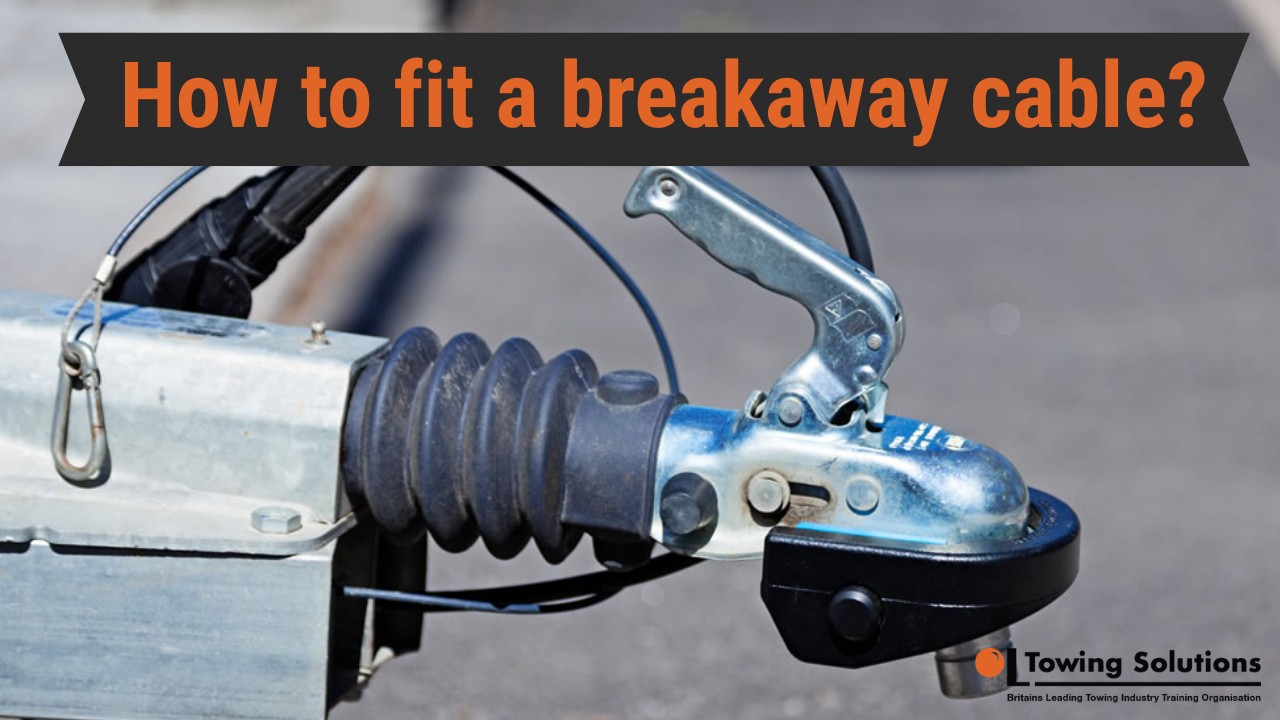
A worn, stretched or damaged breakaway cable is a small issue that can quickly become a serious safety risk. If a trailer or caravan becomes detached from the tow vehicle, the breakaway cable is designed to apply the trailer brakes and help bring it to a stop. In other words, it is one of the most important safety components in any braked towing setup.
For UK drivers, caravan owners, businesses with trailers and fleet operators, knowing how to replace a breakaway cable properly is an essential part of trailer safety. It is also an important part of routine maintenance. A cable that is frayed, corroded, kinked or incorrectly attached can leave you exposed to both safety risks and legal issues.
In this guide, we explain how to replace a breakaway cable step by step in the UK, what tools you need, common mistakes to avoid, and what UK towing law expects. If you tow regularly, this is one of those jobs that is well worth understanding properly.
What Is a Breakaway Cable and Why Does It Matter?
A breakaway cable is fitted to braked trailers and caravans. Its job is simple but critical. If the trailer becomes detached from the tow vehicle, the cable pulls on the trailer’s handbrake mechanism, applying the brakes and helping stop the trailer from continuing uncontrolled.
That makes the breakaway cable a key part of safe towing. Without it, a detached trailer could continue moving into traffic, pedestrians or roadside hazards. For caravan owners and anyone towing heavier trailers, it is not something to ignore or treat as an afterthought.
If you are towing in the UK, you should also be familiar with general towing guidance on GOV.UK, including vehicle and trailer safety requirements. Relevant guidance can be found here:
When Should You Replace a Breakaway Cable?
You should replace a breakaway cable if it shows any signs of wear or damage. Common warning signs include:
- Fraying or broken strands
- Corrosion or rust on the cable or clip
- Kinks, twisting or stretching
- Damage to the clip or attachment end
- A cable that is too short, too long or poorly routed
It is also worth replacing the cable if you have bought a used trailer or caravan and are not confident about the age or condition of the existing one. Compared with the consequences of failure, a new cable is inexpensive.
Tools You May Need
In many cases, replacing a breakaway cable is straightforward and only requires a few basic tools:
- Pliers
- A spanner or wrench, depending on the fitting
- A suitable replacement breakaway cable
- Wheel chocks for safety
- Gloves if preferred
Always make sure the replacement cable is suitable for your trailer or caravan coupling and braking system. Not every cable is identical, and using the wrong one can create a safety issue.
How to Replace a Breakaway Cable Step by Step in the UK
1. Park the Trailer or Caravan Safely
Before starting, park the trailer or caravan on level ground. Apply the handbrake and use wheel chocks if needed. You do not want the trailer moving while you are working on the braking linkage.
If the trailer is still attached to the tow vehicle, make sure everything is stable and secure. Good preparation matters. Even simple maintenance jobs are safer when the trailer is properly supported and cannot roll.
2. Identify How the Existing Cable Is Fitted
The trailer end of the breakaway cable is usually attached to the handbrake lever or to a designated eyelet connected to the trailer braking system. The tow vehicle end is attached to a proper anchor point on the tow bar or tow bar bracket.
Take a moment to look at how the old cable is routed before removing it. That will help you fit the new one correctly and avoid twisting or crossing it with electrical cables.
3. Remove the Old Breakaway Cable
Carefully disconnect the old cable from the trailer end first. Depending on the design, this might involve:
- Unclipping a carabiner-style fitting
- Removing a looped fitting
- Undoing a bolt or securing pin
Then disconnect the other end from the tow vehicle attachment point. If the old cable is damaged, do not be tempted to keep it as a spare. Once it has started to fray or corrode, it is no longer something you should rely on.
4. Inspect the Attachment Points
Before fitting the new cable, inspect both connection points carefully. Look for:
- Wear or damage to the trailer handbrake lever or eyelet
- Corrosion or sharp edges that could damage the new cable
- A secure and suitable tow vehicle anchor point
If the mounting point on either side is damaged, replacing the cable alone is not enough. The whole setup needs to be secure and fit for purpose.
5. Fit the New Breakaway Cable to the Trailer
Attach the trailer end of the new cable to the correct point on the handbrake lever or eyelet. Make sure it is secure, but also free to move as intended. If the fitting uses a bolt, tighten it firmly without restricting the normal movement of the mechanism.
The cable should sit neatly and naturally. Avoid routing it through awkward angles or around sharp metal edges.
6. Attach the Other End to the Tow Vehicle Correctly
This is one of the most important parts of the job. The breakaway cable must be attached to a designated attachment point on the tow bar or tow vehicle setup. It must not simply be clipped around the towball.
In the UK, a common correct method is to attach it to a purpose-made eye or loop on the tow bar. Some setups allow the cable to be looped correctly around the tow bar neck if the manufacturer’s guidance allows it, but it should never be attached in a way that could slip off or fail to operate properly.
If you are unsure, always check the tow bar manufacturer’s instructions and make sure your setup follows good UK towing practice.
7. Check the Length and Routing
The breakaway cable should have enough slack to allow for normal cornering and articulation, but not so much that it drags, snags or becomes tangled. It should not wrap around the electrical plug lead or interfere with safety chains, stabilisers or the jockey wheel.
A poorly routed cable is one of the most common causes of premature wear. If it rubs every time you turn, it will not last long.
8. Test the Setup
Once fitted, gently pull the cable by hand to confirm it is secure and that it would operate the trailer handbrake mechanism if required. You are not trying to damage anything here, just checking that the cable is firmly attached and doing its job.
Then carry out a full walk-around check:
- Is the cable secure at both ends?
- Is it routed neatly?
- Is there enough slack for turning?
- Is it separate from the electrical cable?
Finally, tow the trailer slowly in a safe area and check again after moving off. Sometimes a cable looks fine when parked but sits differently once the vehicle and trailer are aligned for towing.
Common Mistakes People Make
Replacing a breakaway cable is not difficult, but there are a few mistakes that come up time and time again.
Attaching It to the Towball
This is one of the biggest errors. The cable should not be clipped to the towball itself. If the coupling fails, the towball is part of what the trailer is separating from, so attaching the cable there defeats the point.
Using the Wrong Cable
Not all replacement cables are the same. Using one that is the wrong length or unsuitable for the braking system can affect how it works in an emergency.
Too Much Slack
A cable that hangs too low can drag on the road, catch on the coupling or wrap around other components. That leads to wear and increases the chance of failure.
Too Little Slack
If the cable is too tight, it may pull during normal turning and apply the brakes unintentionally or place unnecessary strain on the fitting points.
Ignoring Wear on the Attachment Point
Replacing the cable is only part of the job. If the tow bar anchor point or trailer eyelet is worn or damaged, the whole safety system is compromised.
Legal and Compliance Considerations in the UK
Trailer safety is not optional. UK towing laws place clear responsibility on the driver and operator to ensure the trailer is roadworthy and safe before every journey. That includes the coupling, tyres, lighting, load security and braking system.
For braked trailers and caravans, the breakaway cable is part of that safety setup. A damaged, missing or incorrectly attached cable could contribute to enforcement action, an MOT issue or serious consequences in the event of an incident.
Further official guidance on safe towing and roadworthiness can be found here:
Safety Considerations Before Every Journey
Even if the cable is new, it should still be inspected as part of your regular towing checks. Before heading out, look at:
- The condition of the cable
- The attachment point on the trailer
- The anchor point on the tow vehicle
- Its routing and slack
- Whether it is twisted, trapped or rubbing
This takes seconds, but it is one of the easiest ways to reduce towing risk. For businesses with trailer fleets, breakaway cable inspections should be part of routine maintenance and daily driver walk-around checks.
Why Practical Training Makes a Difference
Many towing issues happen not because people do not care, but because they have never been shown the right way. Breakaway cables, nose weight, loading, hitching up, tyre checks and trailer braking systems all sound simple until something goes wrong.
That is why proper towing and trailer training is so valuable. At Towing Solutions, we help drivers, caravan owners and businesses understand safe, legal towing in real-world conditions. Training gives you the confidence to spot faults early, avoid common mistakes and tow more safely on the road.
If you want to build confidence with a caravan or improve your towing knowledge, our courses are designed to give practical, hands-on guidance rather than just theory.
Conclusion
If you have been wondering how to replace a breakaway cable step by step in the UK, the good news is that it is a manageable job with the right parts, a few basic tools and a careful approach. The key is not just fitting a new cable, but fitting it correctly, checking the routing properly and making sure the whole towing setup is safe and compliant.
A breakaway cable may be a small component, but it plays a major role in trailer and caravan safety. Replacing a worn one promptly and inspecting it regularly is one of the simplest ways to reduce risk when towing.
Need More Confidence with Caravan or Trailer Safety?
If you want expert help with safe towing, hitching, reversing, trailer checks and legal compliance, our practical training can help. Towing Solutions provides professional towing and trailer training designed for UK drivers, caravan owners and businesses that use trailers regularly.
Explore our caravan towing course here and learn how to tow with more confidence, improve safety checks and avoid common mistakes on the road.