
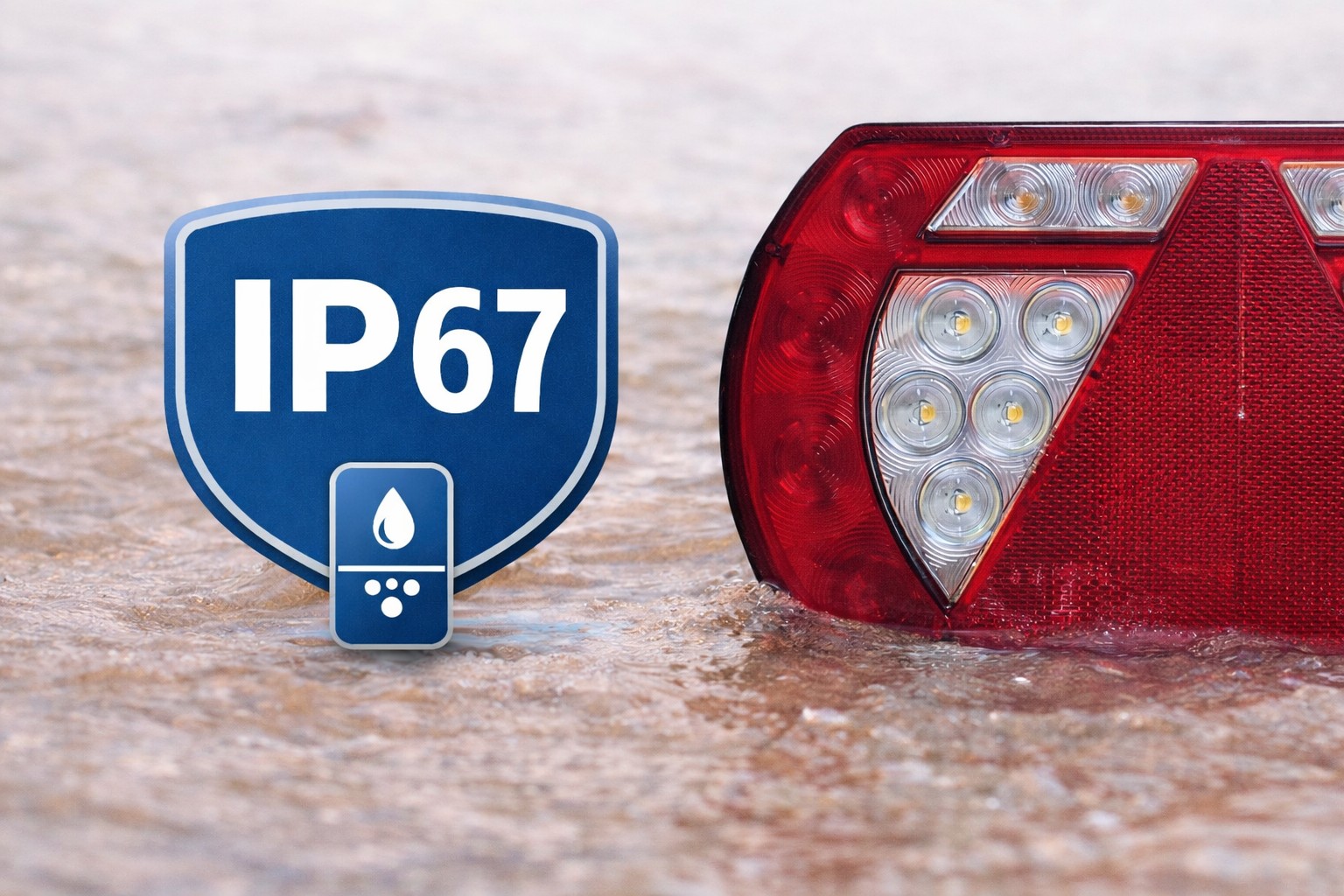
If you operate trailers on construction sites, you will already know how quickly equipment can fail. Mud, standing water, dust, vibration and constant use all take their toll. One of the most common weak points? Trailer lighting.
Lights that work perfectly on the road often fail prematurely on construction sites. Water ingress, corrosion and electrical faults can lead to unreliable lighting, MOT failures and even dangerous situations when towing. This is where understanding IP67 ratings becomes essential.
In this guide, we explain what IP67 means, how it applies to construction trailers, and why choosing the right lighting can improve trailer safety, reduce downtime and keep you compliant with UK towing laws.
What Does IP67 Mean?
IP stands for Ingress Protection. It is an international standard that defines how well a product is protected against solids (like dust) and liquids (like water).
The IP rating is made up of two numbers:
- First digit (6) – Protection against solids
- Second digit (7) – Protection against liquids
IP6X – Dust Tight
The “6” means the unit is completely protected against dust. No particles can enter the housing, even in harsh environments like construction sites or quarries.
IPX7 – Water Protection
The “7” means the unit can be submerged in water up to 1 metre deep for up to 30 minutes without damage.
In simple terms, IP67-rated trailer lights are fully sealed against dust and can handle water immersion. This makes them ideal for construction trailers that operate in challenging conditions.
Why IP67 Matters for Construction Trailers
Construction trailers face conditions far beyond normal road use. Standard lighting often struggles because it is not designed for:
- Constant vibration from uneven ground
- Exposure to mud, grit and debris
- Frequent jet washing or cleaning
- Standing water on sites
- Heavy loading and unloading impacts
IP67-rated LED lights are built specifically to handle these challenges. Their sealed design prevents water and dirt from entering the unit, which significantly reduces electrical failures.
For businesses running fleets of trailers, this means:
- Fewer lighting faults
- Reduced maintenance costs
- Less downtime
- Improved compliance with UK trailer safety requirements
How IP67 Lighting Is Used on Construction Trailers
On construction trailers, IP67-rated lighting is commonly used across all key lighting functions:
- Rear combination lights (brake, tail, indicator, fog)
- Side marker lights
- Number plate lights
- Work lamps or auxiliary lighting
Modern LED trailer lights with IP67 ratings are particularly popular because they combine durability with low power consumption and long lifespan.
This is especially important when towing regularly, as lighting faults are one of the most common issues picked up during roadside checks.
Practical Advice: Choosing the Right IP67 Trailer Lights
1. Check the IP Rating Properly
Not all lights are equal. Some products may claim to be “water resistant” but do not meet IP67 standards. Always check for certified IP ratings.
2. Choose LED Over Bulb Lighting
LED lights are more resistant to vibration and have a longer lifespan. Combined with IP67 protection, they are ideal for construction environments.
3. Look for E-Marked / Road Legal Lights
Ensure the lights are approved for road use in the UK. This is essential for compliance.
4. Consider Wiring and Connectors
Even with IP67 lights, poor wiring connections can still allow water ingress. Use sealed connectors and ensure proper installation.
5. Match the Light to the Application
Plant trailers, tipper trailers and equipment trailers may require different lighting setups. Choose products designed for your specific use.
Common Mistakes When Choosing Trailer Lighting
- Choosing cheap, non-sealed lights for heavy-duty use
- Assuming all LED lights are waterproof
- Ignoring wiring and connector quality
- Incorrect installation leading to water ingress
- Not checking compliance with UK road regulations
Legal Requirements and UK Guidance
Trailer lighting is not just about durability – it is also a legal requirement. Under UK law, trailers must have fully functioning lights at all times when used on the road.
Faulty or non-compliant lighting can result in penalties, prohibition notices, or your trailer being taken off the road by the DVSA.
Safety Considerations for Towing
- All lights working correctly before every journey
- No cracked or damaged lenses
- Secure mounting of all light units
- Clean lenses free from mud and debris
- Proper connection to the tow vehicle
Training for Construction & Utility Companies
For construction companies, utility providers and fleet operators, understanding trailer lighting goes far beyond just replacing a unit when it fails. Knowing how IP ratings, wiring systems and lighting setups work is key to keeping trailers safe, compliant and operational.
At Towing Solutions, we deliver specialist trailer servicing and maintenance training for construction and utility companies across the UK. Our courses cover real-world scenarios, including:
- How to inspect and maintain trailer lighting systems
- Understanding IP ratings such as IP67 and why they matter
- Diagnosing electrical faults and preventing repeat failures
- Correct installation of LED lighting and wiring
- Full trailer safety checks for compliance and DVSA inspections
This type of detail is built into our courses because it is what keeps trailers working reliably in demanding environments like construction sites.
Rather than reacting to faults, training gives your team the knowledge to prevent them – reducing downtime, improving safety and saving money across your fleet.
Conclusion
Understanding what IP67 means is essential for anyone operating trailers in tough environments. It is not just a technical specification – it directly impacts reliability, safety and compliance.
IP67-rated lighting is designed to withstand the realities of construction use, helping prevent water ingress, reduce failures and keep your trailer roadworthy.
When combined with proper maintenance and training, it becomes a key part of a safer, more efficient towing operation.
Improve Your Trailer Safety Knowledge Today
If you want to build confidence in towing, trailer maintenance and safety checks, our courses are designed to give you practical, hands-on experience.
Click here to explore our caravan towing course and learn how to tow safely, avoid common mistakes and stay compliant on UK roads.