
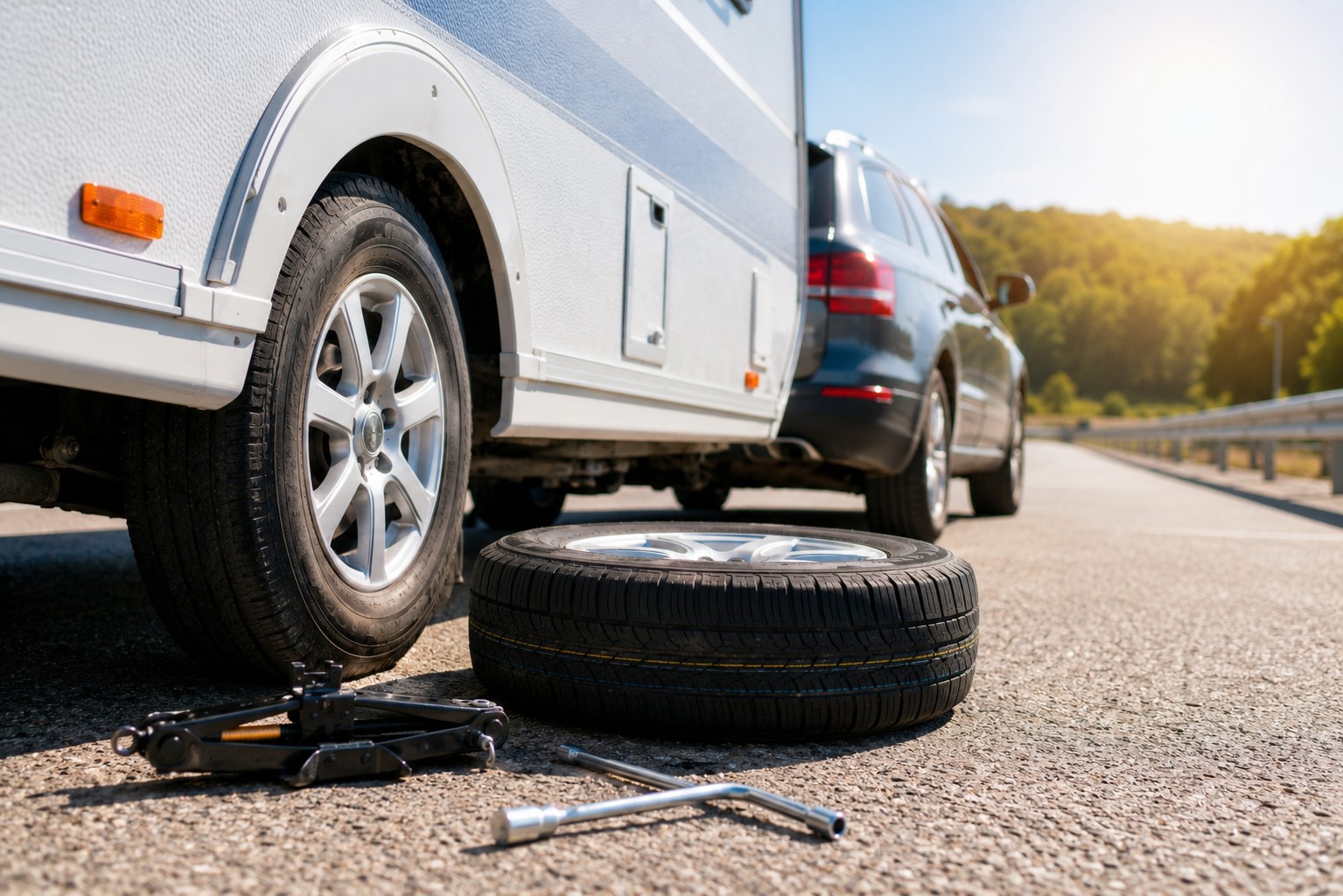
Every summer, roadside recovery companies, breakdown providers and the DVSA see an increase in caravan tyre blowouts, trailer tyre failures and overheating towing problems. High temperatures place additional strain on tyres, wheel bearings, braking systems and towing vehicles, particularly during long motorway journeys.
At Towing Solutions, we regularly work with caravan owners and trailer users who are surprised at how quickly tyre problems can develop during warmer weather. In many cases, the warning signs were present before the journey even began.
Understanding how heat affects caravan tyres is essential for safer towing, legal compliance and reducing the risk of dangerous roadside incidents.
Why Hot Weather Increases Caravan Tyre Risks
Tyres naturally heat up while driving. During hot weather, this heat builds much faster, especially when towing heavy loads or travelling long motorway distances.
Several factors combine to increase the risk of caravan tyre failure during summer:
- High road surface temperatures
- Underinflated tyres
- Overloaded caravans or trailers
- Old caravan tyres
- Poor weight distribution
- Long-distance motorway towing
- Excessive towing speeds
Caravan tyres are particularly vulnerable because many caravans spend long periods stationary during winter storage. Tyres can deteriorate with age even when tread depth still appears acceptable.
Why Caravan Tyres Often Fail Before They Wear Out
Unlike car tyres, caravan tyres may cover relatively low mileage each year. However, exposure to sunlight, standing loads, moisture and long storage periods can cause the tyre structure to weaken over time.
Many caravan owners assume tyres are safe simply because the tread looks good. In reality, age-related deterioration is one of the most common causes of caravan tyre blowouts.
Warning signs include:
- Sidewall cracking
- Bulging
- Flat spots after storage
- Uneven wear patterns
- Perishing rubber
- Vibration while towing
Tyres can fail suddenly at motorway speeds, particularly during high temperatures.
The Dangers of Incorrect Tyre Pressure While Towing
Incorrect tyre pressure is one of the leading causes of tyre overheating.
Underinflated caravan tyres flex more as they rotate, generating excessive heat internally. During hot weather, this heat build-up increases rapidly and can lead to tyre failure.
Overinflated tyres can also reduce stability and affect grip levels.
Before every towing journey, caravan owners should check:
- Tyre pressures when cold
- Tyre condition
- Tread depth
- Tyre age
- Wheel nut torque settings
Official GOV.UK vehicle safety guidance is available here:
https://www.gov.uk/check-vehicle-safe
Towing Weight and Load Distribution Matter
Heatwaves often expose problems with overloaded caravans and poorly balanced trailers.
Excessive weight places additional strain on tyres and increases operating temperatures.
Poor load distribution can also create instability, snaking and uneven tyre loading.
Heavy items should always be:
- Loaded low down
- Positioned close to the axle
- Secured properly
- Balanced evenly across the caravan
Many caravan blowouts happen shortly after owners overload caravans for summer holidays.
Official GOV.UK towing guidance can be found here:
https://www.gov.uk/towing-with-car
TyreSafe TLC Campaign and Towing Safety
Towing Solutions is proud to support towing safety initiatives across the UK and is part of the TyreSafe Towing Alliance, helping promote safer caravan and trailer towing awareness nationwide.
The TyreSafe TLC campaign — Tread, Load, Condition — encourages caravan owners and trailer users to carry out regular tyre safety checks before travelling.
The campaign focuses on three key areas:
- Tread – ensuring tyres remain road legal and safe
- Load – checking tyre pressures match the caravan or trailer load
- Condition – identifying cracks, bulges, damage and age-related deterioration
This is especially important for caravans and trailers, where tyres may age and deteriorate before the tread is fully worn.
Further tyre safety guidance can be found here:
Proud Members of the UK Towing Alliance
Towing Solutions is also a proud member of the UK Towing Alliance, supporting improved towing standards, driver awareness and safer trailer operation across the UK towing industry.
We are also exhibiting at the UK Towing Alliance 20th Annual Conference, continuing our commitment to towing safety, industry training and professional development within the towing and trailer sector.
As a long-established towing industry training provider, we continue working with industry organisations, businesses and caravan users to improve towing safety awareness throughout the UK.
How Heat Affects Towing Vehicles
It is not just caravan tyres that suffer during hot weather.
High temperatures also place additional strain on:
- Vehicle cooling systems
- Automatic gearboxes
- Brakes
- Wheel bearings
- Towing electrics
- Engine performance
This is particularly important when towing uphill, sitting in motorway traffic or towing at maximum train weights.
Drivers should monitor:
- Coolant temperatures
- Vehicle warning lights
- Brake performance
- Tyre pressures
- Trailer stability
Modern Caravans, TPMS and Towing Technology
Many modern vehicles now include advanced towing technology and tyre monitoring systems.
Features may include:
- Trailer stability assist
- Tyre pressure monitoring systems (TPMS)
- Advanced braking systems
- Electronic stability control
- CANbus towing electrics
While these systems can improve towing safety, they should never replace physical safety checks.
Drivers should still inspect tyres manually before every towing journey.
What To Do If a Caravan Tyre Blowout Happens
A caravan tyre blowout can be frightening, particularly at motorway speeds.
If a blowout occurs:
- Keep both hands firmly on the steering wheel
- Do not brake harshly
- Ease off the accelerator gradually
- Allow the outfit to slow naturally
- Move to a safe stopping location carefully
- Turn on hazard warning lights
Sudden steering inputs or harsh braking can worsen instability.
Common Summer Towing Mistakes
Some of the most common mistakes caravan owners make during hot weather include:
- Not checking tyre age
- Towing with incorrect tyre pressures
- Overloading the caravan
- Ignoring noseweight limits
- Towing too fast in hot weather
- Skipping pre-journey safety checks
- Using tyres with visible cracking
Good preparation significantly reduces the risk of breakdowns and tyre failures.
Why Professional Towing Training Matters
Understanding caravan safety, load distribution and towing behaviour is an important part of safer summer towing.
At Towing Solutions, our caravan towing courses help drivers improve:
- Pre-towing safety checks
- Load security awareness
- Trailer stability understanding
- Caravan reversing skills
- Motorway towing confidence
- Safe towing techniques in different weather conditions
As an IMI Approved Centre, approved Caravan and Motorhome Club training provider and official training provider for the NTTA, we continue supporting safer towing across the UK.
Professional Towing Courses at Towing Solutions
We provide a wide range of towing and trailer training courses including:
Caravan Towing Courses
Motorhome Towing Courses
Motorhome Driving Lessons
Boat Trailer Towing Courses
Trailer Reversing Courses
Horse Trailer Towing Courses
Watch Our Caravan & Motorhome Towing Videos
For additional caravan towing advice and safety guidance, watch our videos below:
Caravan Towing Tips & Guidance
Frequently Asked Questions
Do caravan tyres fail more often in hot weather?
Yes. High temperatures increase tyre operating temperatures and can worsen existing tyre weaknesses.
How often should caravan tyres be replaced?
Many experts recommend replacing caravan tyres every 5–7 years regardless of tread depth.
Can incorrect tyre pressure cause caravan instability?
Yes. Incorrect tyre pressure can affect stability, braking and heat build-up.
Does towing speed affect tyre temperature?
Yes. Higher speeds increase tyre heat significantly, especially during summer motorway journeys.
Stay Safe During Summer Towing
Heatwaves can place additional strain on both caravans and towing vehicles. Proper tyre checks, load security and towing preparation are essential for reducing the risk of dangerous roadside incidents.
Professional towing training helps drivers understand caravan behaviour, trailer stability and safe towing practices during changing road and weather conditions.
To learn more about caravan towing and trailer safety courses, visit: