
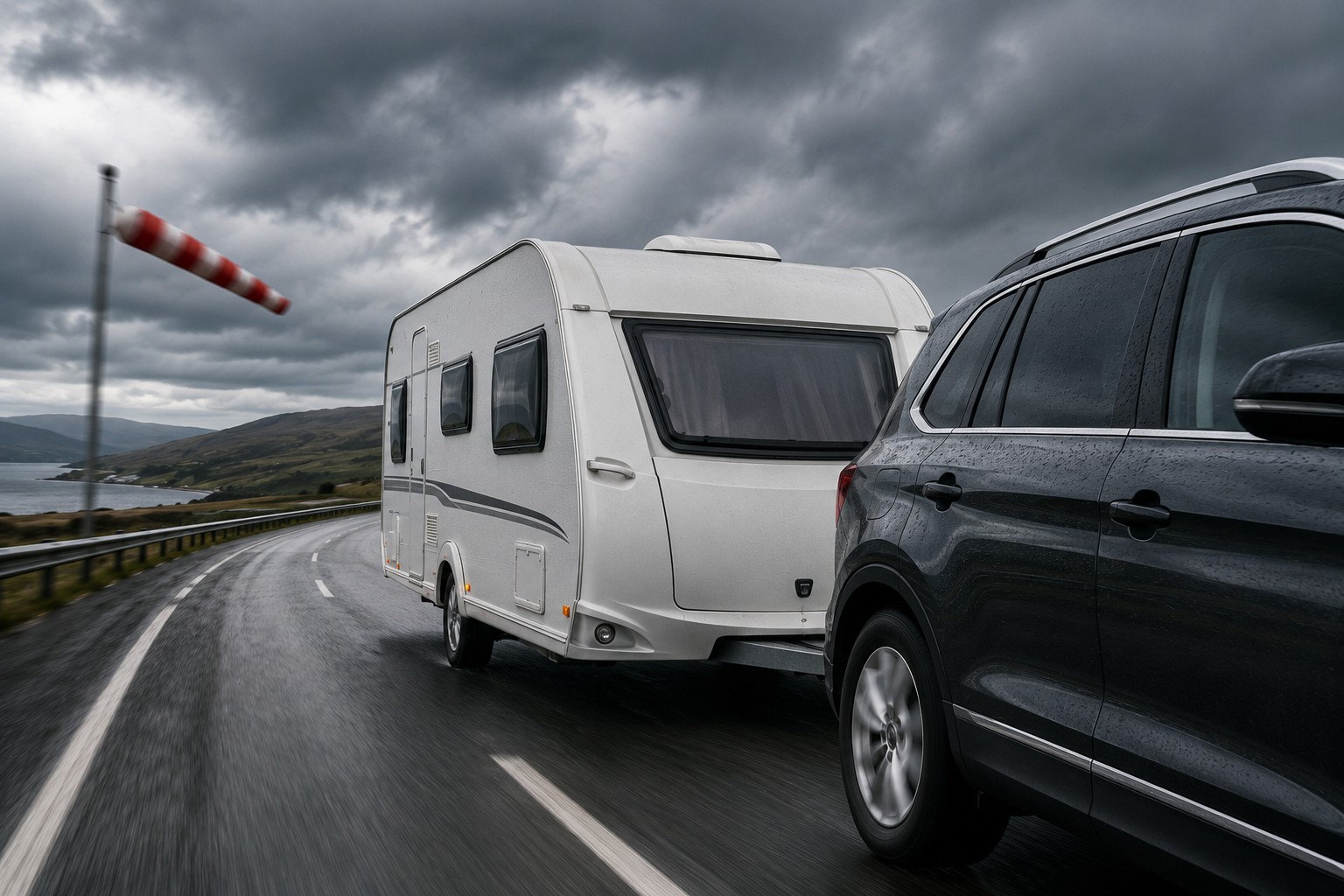
Strong winds are one of the biggest concerns for caravan owners towing on UK roads. Even experienced drivers can feel uncomfortable when crosswinds begin affecting caravan stability, particularly on exposed motorways, bridges and dual carriageways.
Every year, windy weather contributes to caravan snaking incidents, unstable towing behaviour and dangerous roadside situations. During storm warnings and sudden weather changes, many caravan owners ask the same question:
“Is it actually safe to tow a caravan in strong winds?”
The answer depends on several factors including wind strength, towing experience, caravan loading, vehicle suitability and overall towing setup.
At Towing Solutions, we regularly help caravan owners improve towing confidence, trailer stability awareness and real-world towing safety through professional caravan towing courses across the UK.
This guide explains how strong winds affect caravan towing, what causes instability and how drivers can reduce the risk of dangerous towing situations during bad weather.
Why Are Caravans Affected by Crosswinds?
Caravans naturally present a large flat surface area to the wind. When strong side winds hit the caravan, they can push the trailer sideways and unsettle the entire vehicle combination.
Crosswinds are especially dangerous because the caravan effectively acts like a sail behind the tow vehicle.
This can lead to:
- Caravan snaking
- Trailer sway
- Steering instability
- Sudden lane movement
- Reduced driver confidence
- Loss of control in severe conditions
High-sided caravans, motorhomes, horse trailers and box trailers are particularly vulnerable during windy conditions.
What Causes Caravan Snaking?
Caravan snaking occurs when the trailer begins oscillating from side to side behind the towing vehicle.
Snaking can begin gradually or happen suddenly after:
- A strong gust of wind
- Overtaking large vehicles
- Poor load distribution
- Excessive towing speed
- Incorrect noseweight
- Sudden steering inputs
- Tyre or suspension issues
Once a caravan starts snaking, harsh braking or overcorrecting the steering can make the situation worse.
What Should You Do If Your Caravan Starts Snaking?
If caravan snaking begins:
- Keep both hands firmly on the steering wheel
- Do not brake harshly
- Ease off the accelerator gradually
- Avoid sudden steering movements
- Allow the outfit to slow naturally
- Pull over safely when possible
Many modern caravans and towing vehicles now feature trailer stability systems which can help reduce snaking automatically, but drivers should still understand the correct recovery techniques.
How Load Distribution Affects Caravan Stability
One of the most common causes of unstable towing is poor caravan loading.
Incorrect weight distribution makes caravans far more vulnerable to crosswinds and instability.
Heavy items should always be:
- Loaded low down
- Positioned close to the axle
- Secured properly
- Balanced evenly across the caravan
Rear-heavy loading significantly increases the risk of caravan snaking.
Why Noseweight Is So Important
Noseweight refers to the downward force the caravan applies to the towball.
Incorrect noseweight is one of the biggest contributors to poor towing behaviour.
Too little noseweight can increase instability and snaking risk, while excessive noseweight may overload the towbar or rear axle.
Before towing, drivers should always:
- Check vehicle noseweight limits
- Use a noseweight gauge
- Adjust caravan loading if necessary
Motorway Towing and High Wind Risks
Strong winds become even more dangerous at motorway speeds.
Open motorway sections, exposed bridges and overtaking manoeuvres can all increase instability.
Particular care should be taken when:
- Overtaking HGVs
- Driving over bridges
- Passing gaps between buildings or barriers
- Travelling through exposed coastal areas
- Towing downhill in windy conditions
Sudden wind changes caused by overtaking lorries can create a “push-pull” effect on caravans.
Should You Tow in Amber Wind Warnings?
Many caravan owners ask whether they should continue travelling during weather warnings.
There is no specific law banning caravan towing during strong winds, but drivers remain responsible for towing safely and legally.
In reality, if severe weather warnings are issued or winds are strong enough to affect vehicle control, postponing travel may be the safest option.
Large caravans and lightweight trailers are particularly vulnerable during gusty conditions.
Drivers should monitor:
- Met Office weather warnings
- High-sided vehicle alerts
- Bridge restrictions
- Motorway travel updates
Safe Towing Speeds in Windy Weather
Reducing speed is one of the most effective ways to improve caravan stability during windy conditions.
Even if conditions feel manageable initially, gusts can quickly destabilise a caravan at higher speeds.
Drivers should:
- Increase stopping distances
- Reduce motorway speeds
- Avoid sudden steering inputs
- Allow extra space around HGVs
- Drive smoothly and progressively
Official GOV.UK towing guidance can be found here:
https://www.gov.uk/towing-with-car
UK towing speed limits can be found here:
https://www.gov.uk/speed-limits
Modern Towing Technology and Stability Systems
Many modern vehicles now include towing technology designed to improve caravan stability.
Features may include:
- Trailer Stability Assist
- Electronic Stability Control
- Adaptive braking systems
- Trailer sway control
- Tyre pressure monitoring systems
- Advanced towing mirrors and cameras
While these systems can help reduce instability, they should never replace proper towing preparation and driver awareness.
Best Tow Vehicles for Windy Conditions
Heavier tow vehicles with strong towing stability generally cope better in crosswinds than lighter vehicles.
Important considerations include:
- Vehicle kerbweight
- Wheelbase length
- Suspension setup
- Towing capacity
- Trailer stability technology
Matching the caravan correctly to the towing vehicle remains essential for safer towing.
Common Mistakes Caravan Owners Make in Strong Winds
- Towing too fast
- Ignoring weather warnings
- Incorrect caravan loading
- Poor noseweight setup
- Not checking tyre pressures
- Overcorrecting steering during instability
- Assuming towing experience removes all risk
Good preparation dramatically improves towing safety during bad weather.
Tyre Safety and Trailer Stability
Tyres play a major role in caravan stability during windy weather.
Incorrect tyre pressures or worn tyres reduce grip and increase instability risk.
Towing Solutions is proud to support towing safety initiatives across the UK and is part of the TyreSafe Towing Alliance.
The TyreSafe TLC campaign — Tread, Load, Condition — encourages caravan and trailer users to check:
- Tread – ensuring tyres remain safe and road legal
- Load – checking tyre pressures match caravan loading
- Condition – identifying cracks, damage or age-related deterioration
More tyre safety guidance can be found here:
Proud Members of the UK Towing Alliance
Towing Solutions is also a proud member of the UK Towing Alliance, supporting improved towing standards, towing safety awareness and professional training across the UK towing industry.
We are also exhibiting at the UK Towing Alliance 20th Annual Conference, continuing our commitment to safer towing, trailer training and industry development.
Why Professional Towing Training Matters
Many drivers never receive professional towing instruction, despite towing heavy caravans on busy UK roads and motorways.
At Towing Solutions, our practical towing courses help drivers improve:
- Caravan stability awareness
- Crosswind towing confidence
- Trailer reversing skills
- Safe motorway towing
- Load security understanding
- Emergency towing responses
- Pre-towing safety checks
As an IMI Approved Centre, approved Caravan and Motorhome Club training provider and official training provider for the NTTA, we continue helping drivers tow safely and confidently across the UK.
Professional Towing Courses at Towing Solutions
We provide a wide range of professional towing and trailer training courses including:
-
Caravan Towing Courses
-
Motorhome Towing Courses
-
Motorhome Driving Lessons
-
Boat Trailer Towing Courses
-
Trailer Reversing Courses
-
Horse Trailer Towing Courses
Watch Our Caravan Towing Videos
For additional caravan towing advice and safety guidance, watch our videos below:
Caravan Towing Tips & Guidance
Frequently Asked Questions
Can you tow a caravan in strong winds?
Yes, but conditions, towing experience, caravan loading and wind strength all need careful consideration.
What wind speed is dangerous for caravan towing?
Strong gusting crosswinds can affect caravan stability significantly. Many drivers choose not to tow during amber weather warnings or severe wind conditions.
What causes caravan snaking?
Snaking is often caused by poor loading, incorrect noseweight, excessive speed or strong crosswinds.
Should I slow down when towing in windy weather?
Yes. Reducing speed improves stability and gives drivers more time to react safely.
Tow Safely in Changing Weather Conditions
Strong winds can quickly turn an enjoyable caravan journey into a stressful or dangerous situation.
Understanding caravan stability, trailer loading and towing behaviour helps drivers make safer decisions during bad weather and improves confidence behind the wheel.
To learn more about professional caravan towing and trailer safety courses, visit: