
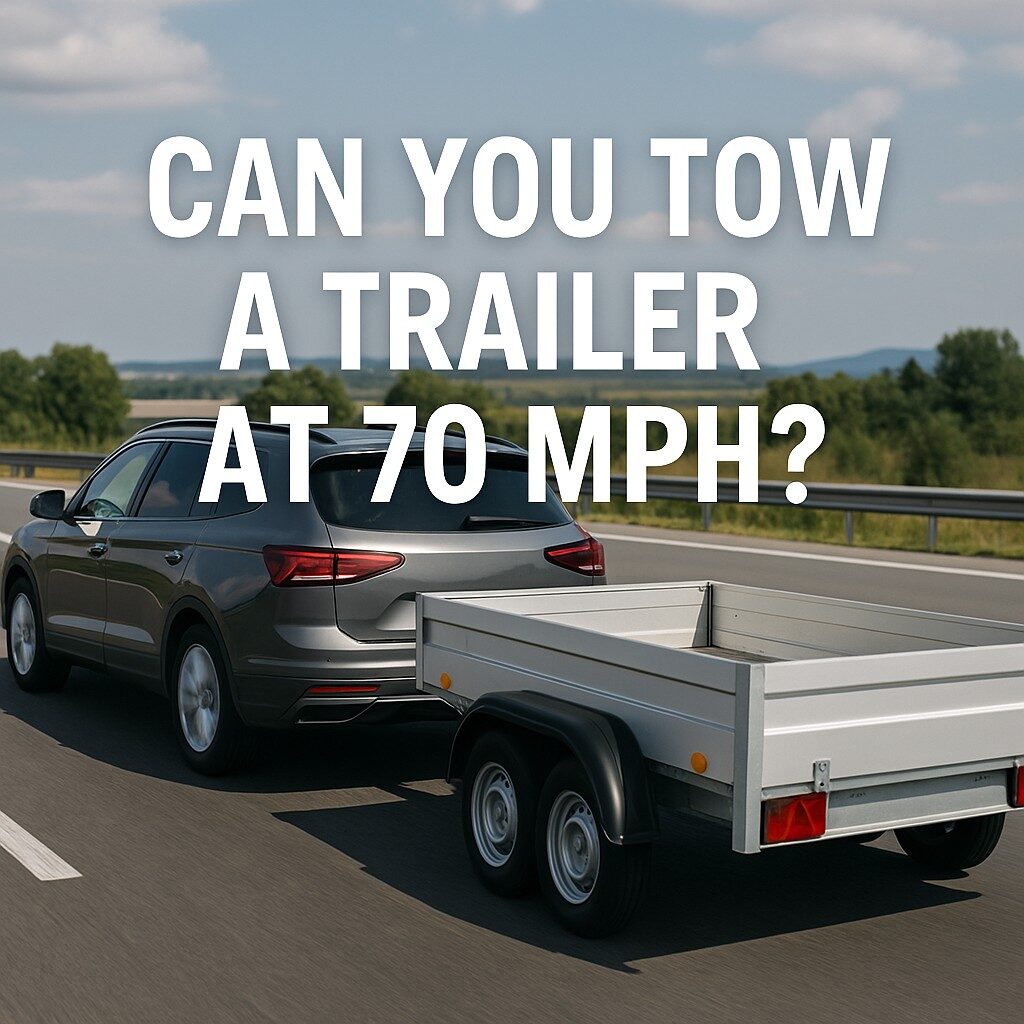
Can You Tow a Trailer at 70 mph?
If your business uses trailers regularly — whether for traffic-management, plant hire, utility works or haulage — one question often comes up: “Can we tow a trailer at 70 mph?” The short answer: rarely. And in this post, we’ll explain why, what the legal limits are, and how you can keep your fleet safe, compliant and efficient.
What does UK law say about speed limits when towing?
According to the official national speed-limit guidance on Driver and Vehicle Standards Agency (DVSA)’s website:
“You must not drive faster than the speed limit for the type of road and your type of vehicle.” GOV.UK+1
But when you tow a trailer, the limits are lower than for a solo car or van. The trade body National Trailer & Towing Association (NTTA) states clearly:
-
30 mph in restricted roads (street-lit unless signs show otherwise)
-
50 mph on single carriageways
-
60 mph on dual carriageways and motorways when towing a trailer. NTTA+1
The upshot? 70 mph is not generally allowed when towing a trailer on a motorway or dual carriageway. Driving at 70 mph while towing could put you above the legal maximum and expose your business to increased risk of enforcement, higher maintenance costs and safety incidents.
So why can’t you tow at 70 mph?
There are a number of reasons:
-
Stability & handling: When you tow a trailer, the combination of vehicle-plus-trailer is longer, heavier and more complex to control. The faster you go, the greater stopping distances, the higher the risk of trailer-sway and the harder it is to maintain control.
-
Tyre and running-gear stress: As speed increases, tyres on the trailer and towing vehicle endure more heat, more flex, and more load. According to the tyre-safety charity TyreSafe:
“Whatever you tow, tow with safe tyres … this comprehensive guide is designed to equip you with the knowledge needed to ensure your towing experience is safe, legal and trouble-free.” TyreSafe | Safe Tyres Save Lives+1
-
Legal and fleet-compliance risk: If you exceed the speed limit for the type of combination you are driving, your vehicle insurance may be affected, you may be at higher risk during enforcement checks, and fleet downtime may increase.
What if I’m using a commercial van and trailer for work?
You might be towing larger trailers, operating in a fleet context and wondering if the standard towing speed limits apply. The answer remains: yes — the rules around speed when towing apply, and your fleet operations must comply.
Even when operating for business purposes, you still must ensure your combination meets the legal speed limits for towing. If your operations overstep the limit of 60 mph for a trailer-rigid combination on the motorway, you increase exposure to risk.
Why trailer tyres matter at speed
Tyre maintenance becomes critical when towing. TyreSafe’s guide to trailer-tyre care emphasises:
-
Correct load-rating and air-pressure for trailer tyres are vital. TyreSafe | Safe Tyres Save Lives+1
-
Using the wrong type of tyres, mismatched construction (radial vs cross-ply), or under-inflated tyres increases the risk of failure. TyreSafe | Safe Tyres Save Lives
-
Tyre failures or defects are among the most common causes of prohibitions and breakdowns for trailers. TyreSafe | Safe Tyres Save Lives
Therefore, even if you are travelling within the legal 60 mph max when towing, you cannot treat your tyres or running-gear lightly. At higher speeds the margin for error fades fast.
What should your fleet do? Training, checks & compliance.
At Towing Solutions, we recommend the following three-point plan for fleets that tow trailers:
1. Establish safe speed practice.
Make sure your drivers understand that the maximum safe speed when towing a trailer is 60 mph at most on dual carriageways/motorways. Build your company policy around that, and integrate it into driver briefings.
2. Ensure tyre and trailer check programmes.
Link your fleet’s servicing schedule to trailer checks: tyre pressure, tread depth, correct load rating, correct tyre construction, and correct hitch-coupling condition. Use TyreSafe’s resources for training and fleet awareness. TyreSafe | Safe Tyres Save Lives+1
3. Strengthen driver competence through training.
We offer several courses designed specifically for business fleets and trailer operators:
-
Trailer Servicing & Maintenance Course
All courses blend theory and practical training — including manoeuvres, hitching/unhitching, reversing with trailers, load-distribution and safe road driving.
Bringing it all together
So back to the original question: “Can you tow a trailer at 70 mph?” In virtually all normal work-fleet towing scenarios the answer is no — because the legal speed limit when towing a trailer is 60 mph on motorways and dual carriageways. Driving at 70 mph would likely be above the maximum and increase risk significantly.
Instead, your business should adopt a cautious, well-trained approach:
-
Use tyre-safe equipment — correct load ratings, specifications and checks.
-
Train operators and engineers in best-practice towing, hitching, servicing and load-secure behaviour.
-
Set internal policy speed limits that reflect safe control (60 mph or lower), not just legal maximums.
-
Document your fleet’s servicing schedule for trailers and associated running-gear.
By doing so you’ll reduce the chances of enforcement issues, avoid costly breakdowns, and improve driver confidence and fleet reputation.
Final thoughts
In the commercial towing world, safe speed is only one piece of the puzzle. If your trailers are well-maintained, tyres properly checked and drivers correctly trained then your fleet is in a far stronger position. At Towing Solutions we believe sound training + robust servicing = safer towing, lower risk and better business outcomes.
Request a course today and ensure your fleet is equipped for safe, compliant trailer operations – even when road speeds tempt you.
👉 Explore all our industry courses