
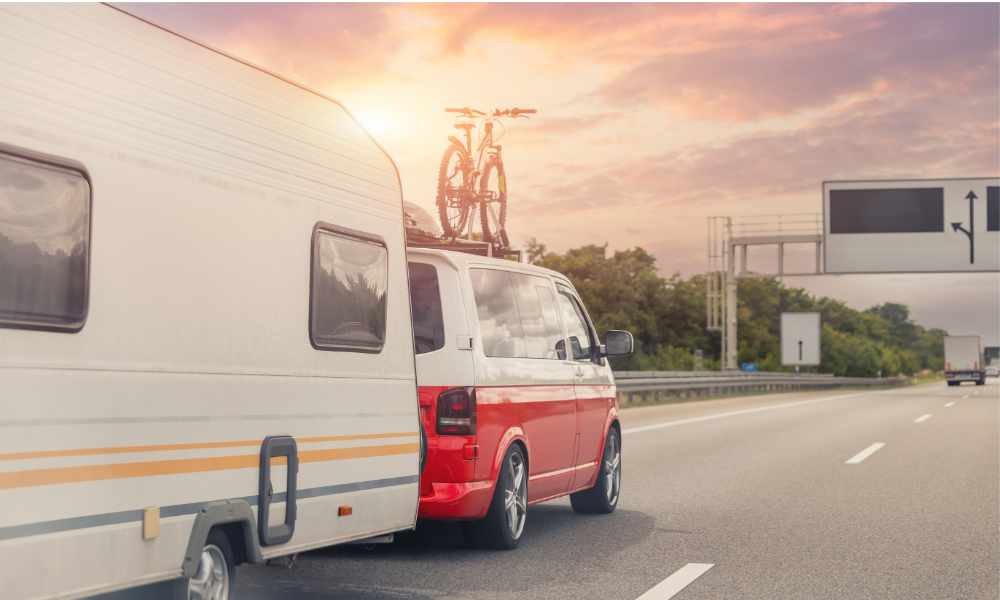
Towing a caravan involves more than just hitching up and driving off. Ensuring your caravan’s nose weight is correct, understanding the impact on your vehicle’s performance, and knowing how to handle issues like snaking and pitching are all key to a safe journey. In this guide, we’ll cover everything you need to know about nose weight, stabilisers, breakaway cables, and essential safety checks before setting off. By following these tips, you’ll not only enhance your towing experience but also minimise risks on the road, giving you peace of mind throughout your travels.
Nose Weight and Towball Capacity
The nose weight is the downward force the caravan exerts on the tow hitch of your vehicle. This weight affects how your caravan handles on the road, so it’s vital to get it right:
- Recommended nose weights usually range between 75 kg and 100 kg.
- Aim for the nose weight to be 5-7% of your caravan’s MTPLM. For example, if your MTPLM is 1,400 kg, your nose weight should be around 70 kg.
Check Your Vehicle’s Towball Capacity: Find the maximum towball load for your car in the vehicle manual or online. The caravan’s nose weight must be lower than your vehicle’s limit to avoid damage to the car’s chassis.
Measuring Nose Weight
Using a nose weight gauge can help ensure safe towing. Here’s a quick method:
- Load your caravan fully and park it on a flat surface.
- Lower the jockey wheel until it’s about 20 cm from the ground and clamp it.
- Unhitch the caravan from the car and position the nose weight gauge under the hitch head.
- Lower the hitch onto the gauge until the jockey wheel just lifts off the ground, then read the gauge.
Be cautious: Too much nose weight can lead to poor handling and damage your towbar.
Towbar-Mounted Bike Racks
Adding a bike rack to the towbar increases the nose weight. Adjust the caravan’s nose weight to account for this additional load.
Handling Issues: Snaking and Pitching
- Snaking: This is when the caravan starts to sway or fishtail. It can be caused by:
- Incorrect loading (e.g., too much weight at the back)
- Excessive speed
- Strong crosswinds or the suction effect from passing large vehicles
What to Do If Snaking Occurs:
- Take your foot off the accelerator.
- Don’t brake suddenly. Instead, change down gears smoothly if possible.
- Steer gently and avoid sudden movements.
- Keep calm and let the caravan straighten itself out.
- Pitching: This happens when there’s too much nose weight, causing the rear of the car to dip. This lightens the front of the vehicle, reducing steering control.
Using Stabilisers
Stabilisers, such as the ALKO coupling head, help reduce lateral movement. These use friction pads to grip the towball, so keep the towball free from grease and clean it with a brake disc cleaner.
Caravans with Active Trailer Control (ATC) detect excessive swaying and apply the caravan brakes automatically, helping to bring the caravan back in line. A green light on the A-frame indicates the system is working.
Breakaway Cables
A breakaway cable is a legal requirement. If the caravan detaches, the cable pulls the handbrake on. Attach the cable securely, either to a dedicated point on the towbar or wrapped around the towball. Failing to use it properly can result in fines and points on your licence.
Final Safety Checks Before Setting Off
- Turn off the gas and check all windows, roof lights, and exterior fittings.
- Ensure the caravan is properly hitched to the towing vehicle.
- Empty all water tanks.
- Secure wardrobes and cupboards to prevent items from moving during transit.
Maintenance Tips
- Keep up with annual servicing to maintain safety and performance.
- Check tyre pressures before every trip and replace tyres if they show signs of ageing or damage.
Towing a caravan safely involves careful preparation and attention to detail. Understanding the legal requirements, ensuring your caravan is loaded correctly, and performing pre-trip checks can make your journey safer and more enjoyable.
For more top tips check out our video here