
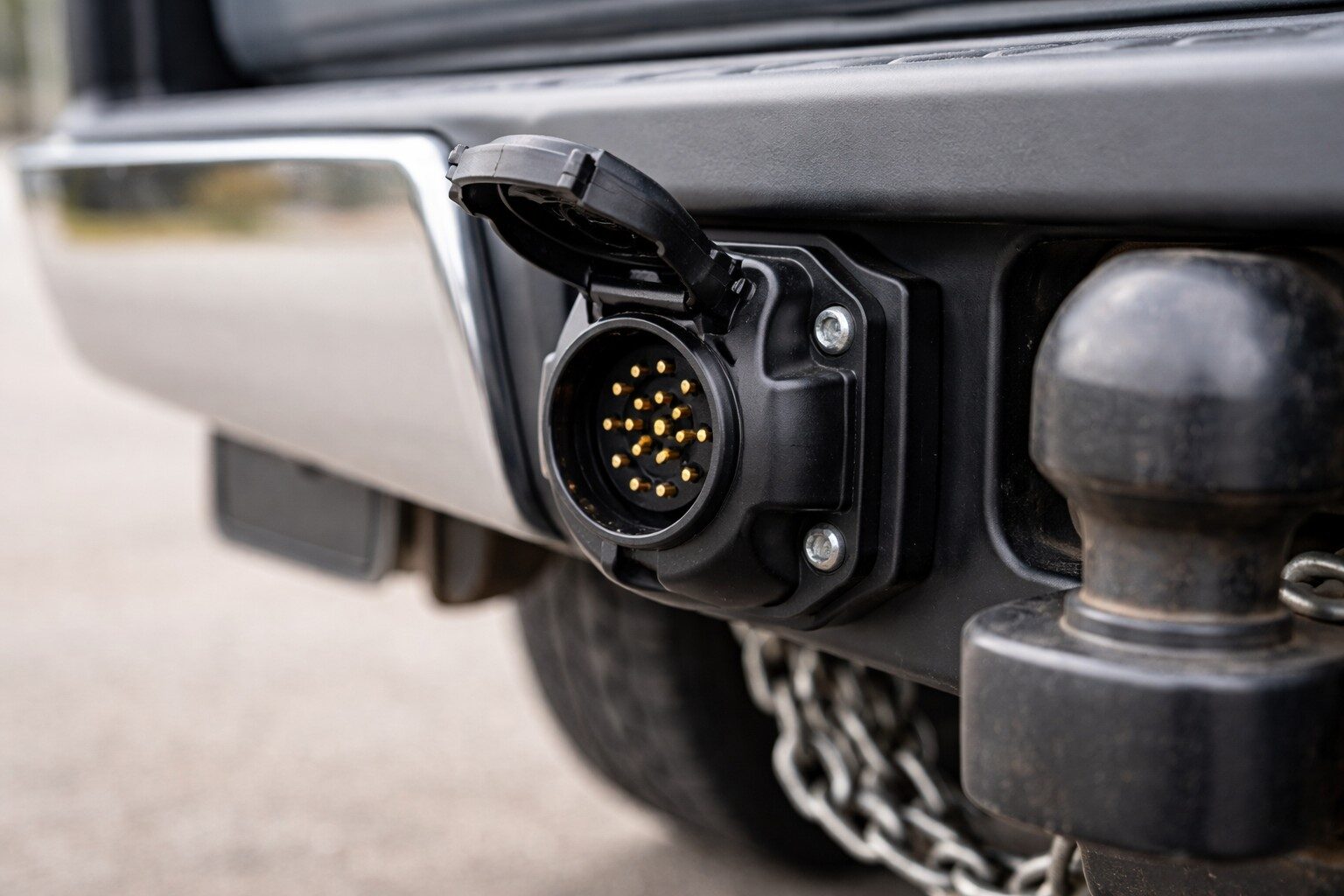
If you tow a trailer, caravan or horsebox, understanding the difference between a 7 pin and 13 pin plug is essential for safety, legality and reliability.
One of the most common questions we’re asked at Towing Solutions is: “What’s the difference between a 7 pin and 13 pin plug?”
Whether you’re a driver, technician, fleet operator or caravan owner, choosing the correct towing electrics matters more than many people realise.
This guide explains the difference between a 7 pin and 13 pin plug, how each system works, what UK law expects, and which option is best for your towing setup.
What Is a 7 Pin Plug?
A 7 pin plug is the traditional electrical connector used on trailers in the UK. It provides the basic lighting functions required for road legality.
A standard 7 pin plug supplies power to:
- Left indicator
- Right indicator
- Tail lights
- Brake lights
- Rear fog light
- Earth connection
7 pin plugs are commonly found on:
- Small domestic trailers
- Plant and equipment trailers
- Utility trailers
- Some older caravans
They are simple, robust and cost-effective, but they only support basic lighting. They do not provide power for reversing lights, battery charging or interior caravan systems.
What Is a 13 Pin Plug?
A 13 pin plug is the modern European standard for caravan and towing electrics. It combines all lighting and auxiliary power functions into a single sealed connector.
A 13 pin plug provides:
- All standard road lighting functions
- Reversing light
- Permanent 12V supply
- Switched 12V supply (ignition controlled)
- Caravan battery charging
- Fridge power while driving
- Improved earth connections
13 pin plugs are now standard on:
- Modern caravans
- Horse trailers with living accommodation
- Commercial trailers requiring auxiliary power
- Most new towbar installations
Difference Between a 7 Pin and 13 Pin Plug (Quick Comparison)
| Feature | 7 Pin Plug | 13 Pin Plug |
|---|---|---|
| Road lights | Yes | Yes |
| Reversing light | No | Yes |
| Battery charging | No | Yes |
| Caravan fridge power | No | Yes |
| Single sealed connector | No | Yes |
| Weather protection | Limited | Excellent |
| Modern UK standard | Basic trailers | Caravans & modern towing |
Which Is Better: 7 Pin or 13 Pin?
There’s no single “better” option — the right choice depends on what you tow and how you use it.
A 7 pin plug is suitable if:
- You tow basic trailers
- You only need road lighting
- No auxiliary power is required
A 13 pin plug is the better option if:
- You tow a caravan or horse trailer with living
- You need fridge or battery charging power
- You want a modern, sealed and reliable connection
- You are fitting a new towbar
Most manufacturers and professional installers now recommend 13 pin systems as standard for future-proofing.
Is There a Legal Requirement in the UK?
UK law requires that all mandatory trailer lights function correctly — indicators, brake lights, tail lights and fog lights.
There is no legal requirement to use a 13 pin plug, but caravans with reversing lights and onboard systems must have a compatible electrical supply.
Government towing guidance confirms that all lights must operate correctly and trailers must be roadworthy before use.
Common Problems We See with Towing Electrics
- Incorrect adapters fitted
- Poor earth connections
- Water ingress in 7 pin sockets
- Caravan batteries not charging
- Reversing lights not functioning
These issues often lead to roadside faults, warning lights on modern vehicles, or failed inspections — all avoidable with correct installation and training.
Train to Work on Towing Electrics Properly
Understanding the difference between a 7 pin and 13 pin plug is just the start. Our courses cover towing electrics, fault finding, legal compliance and best practice.
Who Should Consider Professional Training?
- Trailer and caravan service engineers
- Towbar installers
- Fleet and transport managers
- Hire companies
- Anyone responsible for towing safety
Correct electrics are critical for safety, customer confidence and legal compliance.
FAQ: 7 Pin vs 13 Pin Plug
Can I convert a 7 pin socket to 13 pin?
Yes, but a proper conversion requires additional wiring and relays. Simple adapters do not provide charging or fridge power.
Can I use an adapter between 7 pin and 13 pin?
Adapters allow basic lighting but do not enable auxiliary functions like battery charging or fridge operation.
Do all caravans use 13 pin plugs?
Most modern caravans do. Older models may still use twin 7 pin connectors.
Which plug is best for electric vehicles?
13 pin systems are strongly recommended for EVs due to improved power management and vehicle integration.
Need Advice or Training?
Email: [email protected]
Phone: 01625 433251
Website: www.towing-solutions.co.uk