
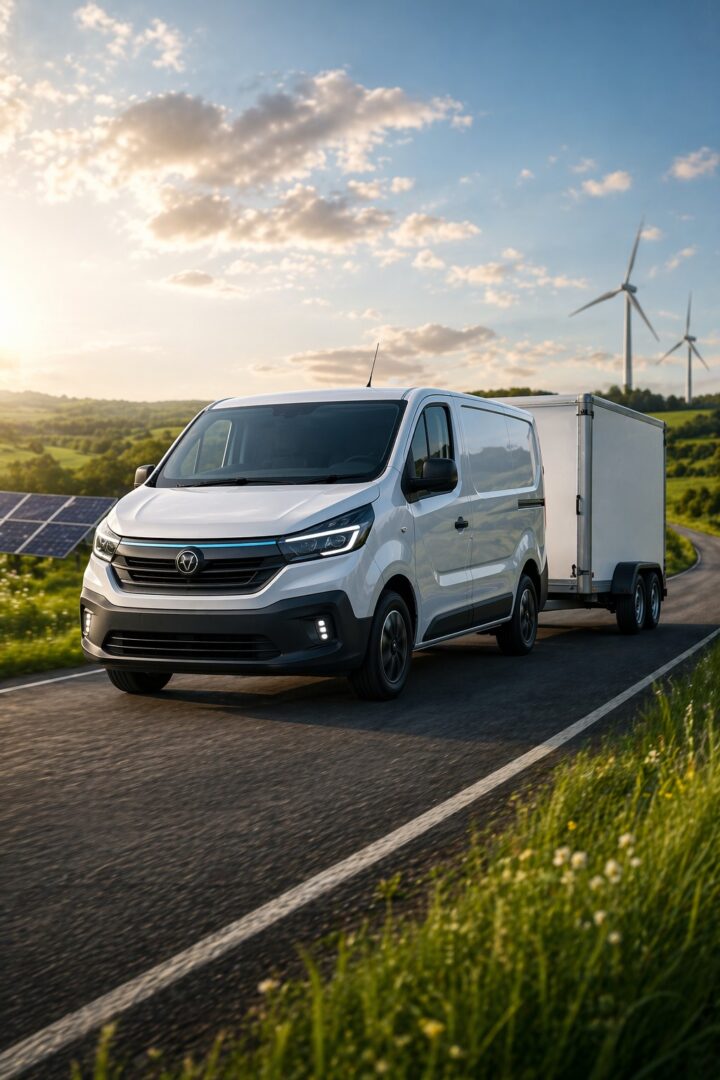
Electric vehicles (EVs) are rapidly becoming the preferred choice for UK businesses. Rising fuel costs, environmental pressures, and global uncertainty have all played a part—but recent geopolitical tensions have further exposed the vulnerability of traditional fuel supply.
As a result, more companies are transitioning to electric vans and fleet vehicles to reduce costs and improve long-term stability. However, for businesses that rely on towing trailers, equipment or caravans, this shift introduces new challenges that many drivers are not yet prepared for.
This is where proper training becomes essential.
Why EV Adoption Is Increasing in UK Businesses
Fuel Price Uncertainty
Global instability has caused fluctuations in fuel pricing, making budgeting difficult for businesses. EVs provide more predictable running costs and reduce reliance on imported fuel.
Government Policy and Net Zero Targets
The UK Government continues to encourage EV adoption as part of its net zero strategy. Businesses are increasingly expected to reduce emissions and modernise fleets.
Read GOV.UK guidance on electric vehicles
Lower Running and Maintenance Costs
Electric vehicles have fewer moving parts, meaning reduced servicing costs and less downtime—ideal for fleet operators.
Company Image and Environmental Responsibility
Switching to EVs demonstrates a commitment to sustainability, which is increasingly important for contracts and reputation.
What EVs Mean for Towing and Trailer Use
While EVs offer many advantages, towing with an electric vehicle is very different from towing with a diesel or petrol vehicle.
Instant Torque – But Different Driving Feel
EVs deliver immediate torque, which can make pulling a trailer feel easier. However, this also requires better control and awareness, particularly when manoeuvring.
Reduced Range When Towing
Towing a trailer can significantly reduce battery range—often by 30–50%. This makes journey planning essential.
Charging Challenges with Trailers
Accessing charging points with a trailer attached can be difficult. Drivers must consider layout, space and accessibility.
Weight and Load Management
EVs are heavier than traditional vehicles. Combined with a trailer, this increases the importance of understanding weight limits and safe loading.
View UK towing laws and guidance
Practical Advice for Businesses Using EVs for Towing
1. Check Towing Capacity
Not all EVs are approved for towing. Always confirm manufacturer limits before use.
2. Plan Charging Stops in Advance
- Identify trailer-friendly charging locations
- Allow extra time for charging
- Avoid low battery situations when towing
3. Train Drivers on EV-Specific Behaviour
Acceleration, braking and handling differ significantly with EVs. Without training, drivers can struggle to adapt safely.
4. Carry Out Pre-Tow Checks
- Check hitch and coupling
- Inspect trailer lights and electrics
- Confirm correct load distribution
5. Practice Reversing and Manoeuvring
EV throttle response can be more sensitive. Controlled practice is essential for safe operation.
Common Mistakes When Towing with EVs
- Assuming EVs behave the same as diesel vehicles
- Underestimating range reduction when towing
- Not training drivers on EV towing techniques
- Ignoring legal weight limits
- Poor route planning for charging access
These mistakes can lead to increased costs, breakdowns, and safety risks.
Legal Requirements for EV Towing in the UK
The same towing laws apply regardless of vehicle type:
- Correct driving licence entitlement
- Trailer must be roadworthy
- Lighting must meet legal standards
- Loads must be secure and safe
Failure to comply can result in fines or prohibition notices from enforcement authorities.
Safety Considerations for EV Towing
Regenerative Braking
EV braking systems behave differently and can affect trailer control if drivers are not familiar with them.
Vehicle Stability
Battery weight lowers the centre of gravity, but incorrect loading can still cause instability.
Driver Awareness
Understanding how EVs respond under load is critical to avoiding accidents.
Why EV Driver Training Is Now Essential for Businesses
As more businesses switch to electric vans and fleet vehicles, driver knowledge is often lagging behind the technology. This creates risk—not just for drivers, but for companies responsible for safety and compliance.
At Towing Solutions, we provide specialist EV and hybrid driver training designed specifically for real-world use, including towing and trailer awareness.
IMI EV & Hybrid Driver and Trailer Awareness Course
This course is ideal for businesses introducing EVs into their fleet and needing drivers to understand both vehicle operation and safe trailer use.
View IMI EV & Hybrid Trailer Awareness Course
- Understanding EV and hybrid vehicle systems
- Safe towing practices with electric vans
- Trailer checks and legal compliance
- Real-world practical training
- IMI recognised certification
Electric & Hybrid Van Driver Training Course
For businesses looking to upskill drivers in EV operation, efficiency and safety, this course focuses on day-to-day use of electric vehicles.
View Electric & Hybrid Driver Training Course
- Efficient EV driving techniques
- Battery management and range optimisation
- Understanding charging systems
- Safe operation in real-world conditions
Conclusion
Electric vehicles are becoming a key part of UK business operations, driven by cost savings, environmental targets and global uncertainty. However, when it comes to towing, EVs introduce new risks that must be managed correctly.
Businesses that invest in proper training will not only improve safety but also reduce downtime, protect assets and ensure compliance with UK regulations.
Book EV and Towing Training Today
If your business is transitioning to electric vehicles, now is the time to ensure your drivers are fully prepared.
Book your EV & Hybrid Driver and Trailer Awareness training today
Or for general towing confidence:
View our Caravan & Towing Training Courses